Tuesday

Tushita Meditation Centre


Tushita is a centre for the study and practice of Buddhism from the Tibetan Mahayana tradition.
                    Tushita Meditation Centre is located in Dharamkot village, near Mcleodganj, Upper Dharamshala. The centre offers Introduction to Buddhism Courses and intermediate level courses for those who have already taken one of these introduction courses besides conducting Group Practice Retreats for practitioners of Tibetan Buddhism.
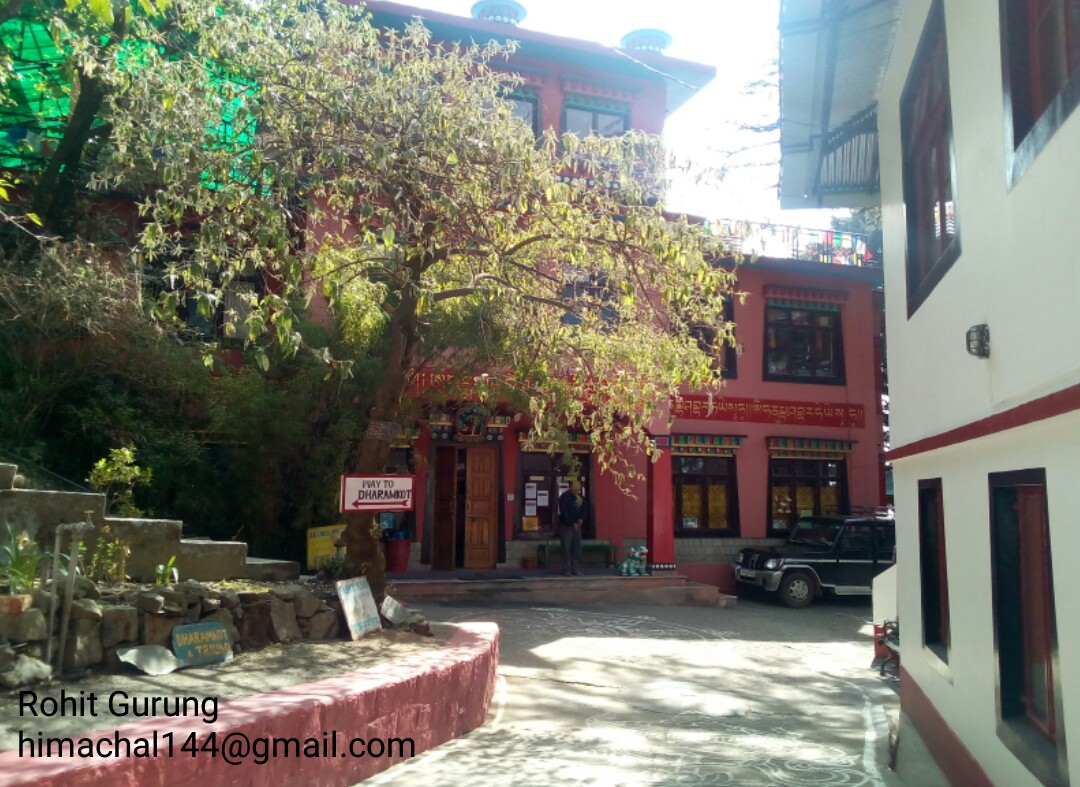
In the Tushita Meditation Centre there are Stupa of Thubten Yeshe and Stupa of Geshe Rabten.


Lama Thubten Yeshe    
Lama Thubten Yeshe   

Lama Thuben Yeshe was born in Tolung, near Lhasa, Tibet, in 1935. At the age of eight, he became a monk in Sera monastery and began to study the main Buddhist philosophical texts. Fleeing the Chinese invasion in 1959, Lama Yeshe  came into India and spent 7 years in the Lama Refugee Camp at Buxaduar (West Bengal, India), where he continued his studies and started to teach. Here he met his main disciple Thubten Zopa Rinpoche. They began to teach an ever increasing number of westerners and later settled at Kopan in Nepal, which became the seat of a meditation centre for westerners and also monastery for Sherpa and Tibetan monks. In 1972 Lama Yeshe  bought property in Dharamkot village, Upper Dharamshala, Himachal Pradesh and called it "Tushita", the Joyous Land.
Lama Thuben Yeshe with Thubten Zopa Rinpoche

Lama Thubten Yeshe passed away in Los Angeles, USA, at the age of 49. His body was cremated at Vajrapani Institute in California and his ashes were distributed among his student. A Stupa was built here at Tushita Meditation Centre to enshrined his relics. Everybody who met Lama Yeshe was touched by his great love and warmth. His life was totally dedicated to the service of others and his concern for all beings manifested in the giving of teachings, offering both spiritual and practical advice to his students and initiating many projects benefiting the wider society and all sentient being.
Stupa of Lama Yeshe

Lama Geshe Rabten
                              Great scholar, debater and meditation master. One of Lama Yeshe and Lama Zopa Rinpoche's main spiritual teacher. Born in Tibet, he escaped to India in 1759 spent many years in solitary retreat and later became assistant to His Holiness the 14th Dalai Lama. On His Holiness request, he began teaching Dharma to westerners from 1974 until he passed away.
Lama Geshe Rabten

"Buddhism is neither the strange tradition of some foreign lands, nor a method for flee from one's responsibilities, nor a collection of dry words in book and libraries. Buddhism is solely to be understood as a means to overcome mental suffering and to accomplish ones own and others wellbeing" Geshe Rabten
Stupa of Geshe Rabten (1920-1986)

See also:  Buddhist Monks Hermitage, near Dharamkot |


Index.......

Magical Losel Doll Museum

Losel Doll Museum

Losel Doll Museum, the world’s largest collection of Losel Dolls, is in the Norbulingka institute. The Museum houses a collection of over 150 dolls dressed in traditional costumes from various regions of Tibet. The costumes, meticulously researched, and made from the same materials as the originals would have been, show the richness and diversity of life on the Tibetan Plateau.They are displayed in stunning dioramas depicting traditional life. 
Map of Tibet in the Museum

The Losel Doll project was started in 1983 as a way of preserving the tradition of Tibetan costumes.
The Losel Dolls were created by a group of artist monks from Drepung Loseling Monastery as a project to support their monastery.
Cham Dance

Cham Dance. Cham is a tantric ritual dance performed by monks on special occasions, a tradition which spread throughout Tibet at the beginning of 11th century. Wearing brocade costumes over their robe, the monks put on masks representing the forceful aspects of deities or creature in their entourage. In slow graceful steps, the reenact the visions and dreams of realized lamas. 

The Cham dance depicted here was performed all over Tibet on 29th of the 12th month of Tibetan calendar - The penultimate day of the year. A deer chops up a dough figure which represents all the evils of the past year, ridding the coming year of obstacles and allowing positive influence.
Horse boat ferried

Horse boat ferried. This horse boat ferried  people, loads and animals across Tibet's rivers and lakes. The passengers are dressed in a variety of costumes of central Tibet. The woman on left is from western Tibet.

Index.........

Norbulingka Institute: heart of Tibetan culture.


Norbulingka Institute is a unique institute located in Sidhpur, a suburb of Dharamshala, (Himachal Pradesh) dedicated to the preservation of Tibetan arts and culture. Norbulingka, which means 'Jewel Park' in Tibetan, takes its name from the Dalai Lama's summer palace in Lhasa, which was renowned for its beautiful gardens and was also a center of religious art.

In 1988, Mr Kalsang Yeshi (former Minister to His Holiness the 14th Dalai Lama) and his wife  Kimberly Sciaky Yeshi (Tibetan name Pema Dolkar,  a French-American anthropologist) founded the Norbulingka Institute. It was set up as a Trust and inaugurated by His Holiness the 14th Dalai Lama in 1995.
Norbulingka Institute provided job and training for those living in the Tibetan diaspora in India. The Institute aim is to spread an awareness of Tibetan culture to the wider world, and hope that through visiting Norbulingka, guests can experience the sophistication of traditions firsthand.

Situated amidst the beautiful gardens, pools and streams, with views of the mighty Dhauladar Mountains in the distance, Norbulingka is a peaceful retreat from the bustling world. The buildings are constructed in traditional architectural style following a ground plan based on the proportions off 1,000 Armed Avalokiteshvara, the Bodhisattva of compassion.

{Avalokiteshvara Bodhisattva
The Sanskrit name "Avalokiteshvara" means "the lord who looks upon the world with compassion". Avalokiteshvara Bodhisattva is has great powers and can help all sentient beings. His skilful means are limitless and he can appear in any form in all the six realms of existence to relieve the suffering of the sentient beings who live there. He vowed to rescue those who call on him when they are in suffering, for example, when caught in a fire, shipwrecked or facing an attack.
Avalokiteshvara Bodhisattva (the Image is not from Norbulingka Institute) downloaded from internet

In Buddhist art, Avalokiteshvara Bodhisattva is sometimes shown with eleven heads, 1000 hands and eyes on the palms of each hand (Thousand-Armed Avalokiteshvara Bodhisattva). The thousand eyes allow the bodhisattva to see the sufferings of sentient beings, and the thousand hands allow him to reach out to help them.}

Norbulingka focuses on design meaning and quality. Every product has a story to tell through its materials, processes and themes. Keeping Tibetan culture alive by training people for future. Currently, more than 300 people work at Norbulingka.
woodcarving artist 

 Norbulingka Institute welcome visitors to take a free guided tour in its grounds and workshops, observing artisans and their apprentices as they practice the ancient Buddhist art forms of statue making, thangka painting, screen-printing, applique and tailoring, woodcarving, wood painting, papermaking, and wood and metal craft.

The temple at Norbulingka is a magnificent example of Tibetan religious architecture and a perfect place for prayer and reflection. The temple had the 14 foot gilded Buddha and the thangka painting on the walls, which were created by Norbulingka artists.


Thangka painting at Norbulingka institute

There is Losal Doll Museum at Norbulingka Institute, where hand made dolls are displayed in beautiful dioramas and are dressed in the colorful traditional costume from the various regions of Tibet.

See also: Losel Doll Museum | Gyuto Tantric Monastry | 


Index.....

Dal : Chota Manimahesh, Shri Durveshvar Mahadev Temple, and Tibetan Children Village

Dal is a small village situated at a distance of  11 kilometers away from Dharamshala near the village of Tota Rani on McLeod Ganj - ...